Ships
Three ships. You own one of them, and the game hands you the other two.
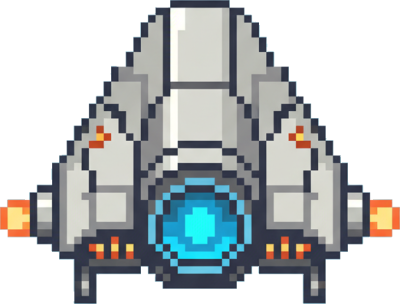
Mosquito
The ship you start with, and the one you keep. Light, forgiving on a landing, and short on cargo space until you upgrade the hold.
Specifications
Best for
Learning to land, light cargo runs, short-range missions
Strengths
- Balanced stats
- Easy to handle
- Yours from the start
Weaknesses
- Limited cargo capacity
- Average performance
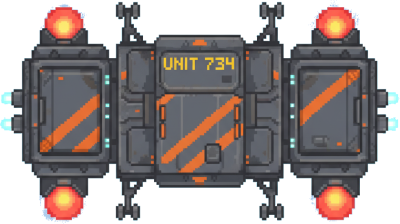
Mule
A heavy hauler built around cargo capacity. Three times the mass of a Mosquito, with the engines to move it, which makes it slow to turn and slow to stop. In Campaign mode you do not buy the Mule: it is hired for you when a mission needs the space.
Specifications
Best for
Campaign missions that need the cargo space (hired, never owned)
Strengths
- Large fuel capacity
- Powerful engines
- Heavy cargo hauling
Weaknesses
- 300kg to slow down
- Sluggish on the stick
- Punishing to land

Vector
The lightest ship in the game and the quickest to respond, at 80kg with a thrust rating of 2.25. In Campaign mode it is hired for you on rescue and reconnaissance missions, where the clock matters more than the cargo hold.
Specifications
Best for
Campaign missions on a clock (hired, never owned)
Strengths
- Lightweight
- High thrust-to-weight ratio
- Very agile
Weaknesses
- 80 units of fuel
- Little cargo space
- Expensive
How ships work
Campaign: the Mosquito is yours, and it is the only ship you trade and explore in. A mission hands you a Mule or a Vector for the duration, fuelled, depending on the job.
Quick Play: all three ships are available to fly. Mass is what you feel on a landing, since a heavier ship needs more thrust to arrest the same descent. The T/W ratio above is thrust divided by mass, so a higher number turns and stops faster.